SUGAR
Global sugar production reached 186 million tons in the 2024/2025 season.
Volume represents an increase of 2.8 million tons compared to the previous season.
The main sugar producers globally are Brazil, India, the European Union, and China, which account for more than 56.3% of production. Likewise, the main consumers are India, the European Union, China, the United States, Brazil, and Indonesia, which together account for more than 51% of all sugar consumed worldwide.
In the 2024/2025 season, global sugar production reached 186 million tons, representing an increase of 2.8 million tons (+2%) compared to the previous season (2023/2024).

The United States Department of Agriculture (USDA) added that for the 2024/2025 season, stocks are estimated to fall by 2.9 million tons, 6.2% less than in the previous season.
It noted that the main sugar producers globally are Brazil, India, the European Union, and China, which account for more than 56.3% of production. Likewise, the main consumers are India, the European Union, China, the United States, Brazil, and Indonesia, which together account for more than 51% of all sugar consumed worldwide.
Considering the average of the last 10 years, 73% of sugar production has been concentrated in eight countries: Brazil (23%), India (19%), the EU (8%), China (6%), Thailand (6%), the United States (5%), Pakistan (4%), and Mexico (3%).
Of these, Brazil and India increased their production the most compared to their historical averages, by 14% or 5.3 million tons and 9% or 3 million tons, respectively.
On the other hand, Thailand and Mexico saw the largest reduction compared to their 10-year average. The former fell -3% (281,000 tons less), while the latter contracted -10% (611,000 tons less).
Twitter
Facebook-f
Linkedin-in
Instagram
International trade
On average, between 2015 and 2024, global exports reached 61.2 million tons, and imports reached 56.6 million tons.
During 2024, exports reached 66.7 million tons, an increase of 3.4 million tons (5.3%) compared to the previous year. This is mainly due to a 96% increase in supply from Thailand, from 5.1 million tons in 2023 to 10 million tons in 2024. Meanwhile, imports reached 57.4 million tons, a decrease of 2.4 million tons (4.1%) compared to the previous year. The slight decrease is mainly due to a decrease in the United States (979,000 tons) (-29.5%) and the European Union (100,000 tons) (-4%). Similarly, the rest of the major countries reduced their import volumes.

Exportations
On average, between 2015 and 2024, global exports reached 61.2 million tons, and imports reached 56.6 million tons.
During 2024, exports reached 66.7 million tons, an increase of 3.4 million tons (5.3%) compared to the previous year. This is mainly due to a 96% increase in supply from Thailand, from 5.1 million tons in 2023 to 10 million tons in 2024. Meanwhile, imports reached 57.4 million tons, a decrease of 2.4 million tons (4.1%) compared to the previous year. The slight decrease is mainly due to a decrease in the United States (979,000 tons) (-29.5%) and the European Union (100,000 tons) (-4%). Similarly, the rest of the major countries reduced their import volumes.

Brazilian Sugarcane Production
The 2024/25 harvest in the Center-South region concluded with the crushing of 621.88 million tons of sugarcane processed by production units, a 4.98% decrease compared to the 654.45 million tons recorded in the previous cycle.
Despite the expected reduction in crushing compared to the previous harvest, the 2024/2025 harvest recorded the second-largest crushing in the history of the Center-South region, in addition to setting a new record for ethanol production.
In the field, the recently concluded harvest was marked by a decline in agricultural productivity in sugarcane fields in the Center-South region, following record productivity in the 2023/2024 cycle. Crops recorded a yield of 77.8 tons of sugarcane per harvested hectare from April 2024 to March 2025, a 10.7% decrease compared to the previous harvest, according to a survey by the Sugarcane Technology Center (CTC).
The state of São Paulo, responsible for approximately 57.5% of sugarcane crushing in the Center-South region, saw a 14.3% decrease (77.6 tons per hectare this harvest versus 90.6 tons per hectare in the previous cycle). In the other producing states, the decrease ranged from 2.7% in Goiás to 12.7% in Mato Grosso do Sul.


BRAZILIAN SUGARCANE PRODUCTION

BRAZILIAN SUGAR PRODUCTION

BRAZILIAN SUGAR EXPORTATIONS


PRODUCTION PROCESS
STAGES OF THE PRODUCTION PROCESS
Harvest
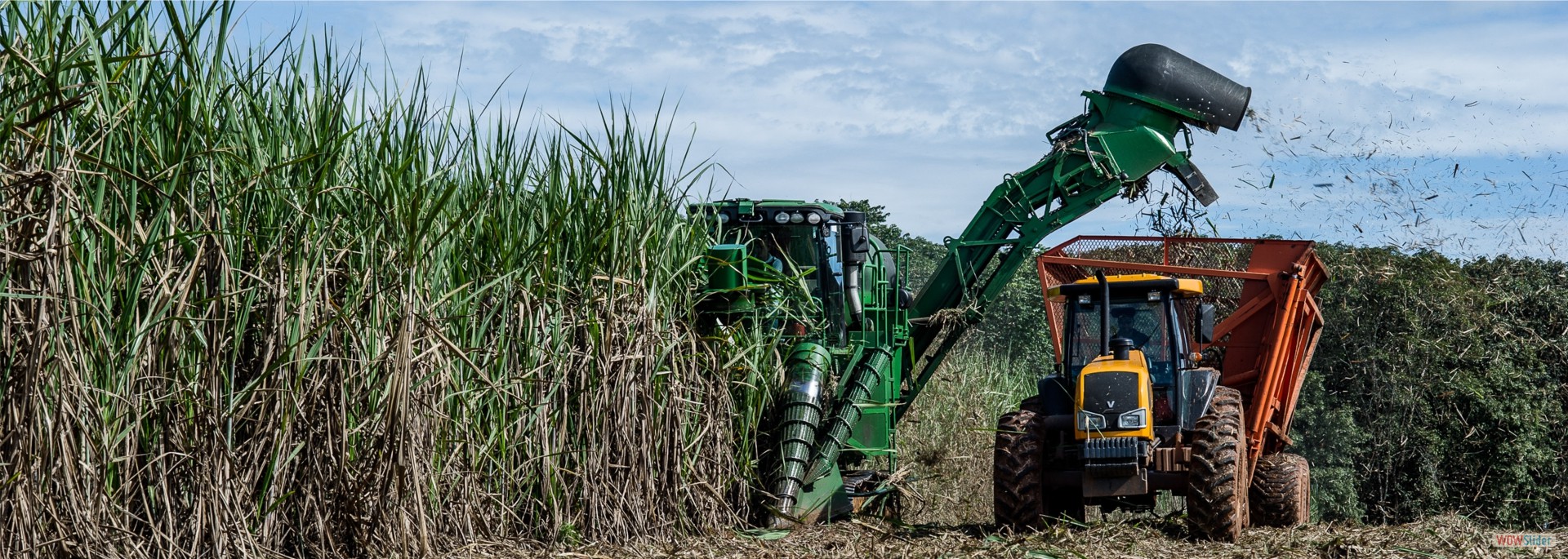
Sugarcane can be harvested manually with machetes, or by mechanical cutters. In order to provide a higher harvest productivity and greater protection and gain of the rural worker, the burning of sugarcane before harvesting has been used a lot. However, this procedure has brought as residual effect to the urban centers located near the plantations, the soot. To overcome this problem, different actions are being developed, for example: development of machines suitable for mechanical harvesting of unburned sugarcane, development of sugarcane varieties with habit of natural spreading, very important for areas with inadequate topography mechanical harvesting. The sugarcane juice extracted in the mills of the industry is pumped to the Sugar Factory through several stages of production.,
Broth treatment – a process that promotes the removal of all soluble and insoluble impurities from the broth, such as sand, bagasse, clay, etc. This is done through the heating, chemical treatment,


decantation and sieving processes.
Evaporation – after the treatment, we obtain a transparent cane juice of slightly yellowish color that basically contains water, minerals and sugars. The purpose of the evaporation is to remove at least 75% of the water present in that clarified broth to make it into a concentrated syrup at about 65 ° Brix (% solids solubles).
Cooking – this step aims at the crystallization and recovery of 80% to 85% of the sucrose present in the syrup. The system used turns the syrup into a mass that will be centrifuged.
Centrifugation – after cooking, the mass goes through a process of physical separation (centrifugation). The sugar is centrifuged and washed with hot water and steam, having as by-product the honey that can be used in the ethanol manufacturing process.
Drying – after centrifugation, the sugar is routed to the dryers for drying and then sifted. In the sequence, it is packaged in big bags of 1200 kg and stored for commercialization.

MAIN BRAZILIAN SUGAR MILLS
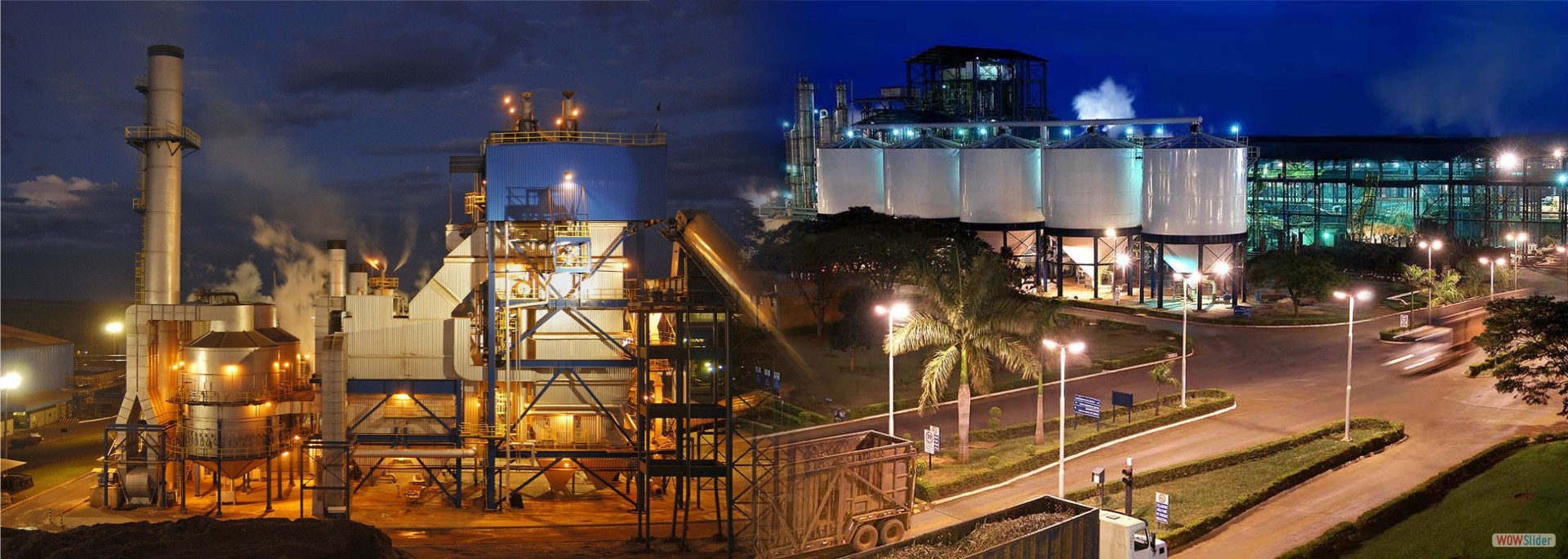
Cruz Alta mill is part of a company formed in April 2010 between the Tereos Internacional group (which controls Guarani) and Petrobras Biocombustível.Guarani is one of the leading companies in the Brazilian sugar-energy sector, owning seven plants in the northwest of the state of São Paulo and one in Moçambique, in Africa.
In 1987, a new undertaking was started, the construction of a new industrial unit in the rural area of the municipality of Olímpia – SP, at Fazenda Cruz Alta, whose name was given to identify Usina.
The Cruz Alta plant was a pioneer in Brazil in the substitution of money for the diffuser of sugarcane and, in 2003, it began to double its capacity.
The following year, its distillery was inaugurated and, currently, with 2,800 employees, the unit houses the Guarani headquarters. Its plant can process 4.6 million tons of sugarcane per year.
Ethanol production capacity: 83 thousand m³/year.
Sugar production capacity: 573 thousand tons/year.
Available power for export of electrical energy: 30 MW.
Mandu mill is part of the partnership formed in April 2010 between the Tereos Internacional group (which controls Guarani) and Petrobras Biocombustível.
Guarani is one of the leading companies in the Brazilian sugar-energy sector, with seven plants in the northwest of the state of São Paulo and one in Mozambique, Africa. In May 2010, Guarani acquired the Mandu Unit, inaugurated in 1980.
Currently, with 1,450 employees, the unit can process 4 million tons of sugarcane per year.
Ethanol production capacity: 212 thousand m³/year.
Sugar production capacity: 312 thousand tons/year.
Available power for electricity export: 60 MW.
Severínia mill is part of the partnership formed in April 2010 between the Tereos Internacional group (which controls Guarani) and Petrobras Biocombustível.
Guarani is one of the leading companies in the Brazilian sugar-energy sector, with seven plants in the northwest of the state of São Paulo and one in Mozambique, Africa.
In 1976, when it was acquired, the Severínia plant was a relatively modest undertaking. The proposal was to process sugarcane to transform it into alcohol, brandy and related products since the 1960s. At the time of the acquisition, the unit produced ethanol and crystal sugar, and it underwent small improvements over time.
In 2005, a modernization process began at the unit, which is currently responsible for processing 2.5 million tons of sugarcane per year. Usina Severínia has 380 employees.
Ethanol production capacity: 104 thousand m³/year.
Sugar production capacity: 250 thousand ton/year.
Vertente mill is part of the partnership formed in April 2010 between the Tereos Internacional group (which controls Guarani) and Petrobras Biocombustível.
Guarani is one of the leading companies in the Brazilian sugar-energy sector, with seven plants in the northwest of the state of São Paulo and one in Mozambique, Africa.
In February 2010, Guarani announced a partnership with Grupo Humus in the Vertente plant, inaugurated in 2004.
Currently, it has 840 employees and can process 2.5 million tons of sugarcane per year.
Ethanol production capacity: 167 thousand m³/year.
Sugar production capacity: 125 thousand ton/year.
Power available for exporting electricity 30 MW.
São José mill is part of the partnership formed in April 2010 between the Tereos Internacional group (which controls Guarani) and Petrobras Biocombustível.
Guarani is one of the leading companies in the Brazilian sugar-energy sector, with seven plants in the northwest of the state of São Paulo and one in Mozambique, Africa.
In May 2006, Usina São José became part of the Guarani group. In August 2011, already in partnership with Petrobras Biocombustível, the unit opened a distillery, starting its ethanol production.
Currently, the unit has 1590 employees and can process 4 million tons of sugarcane per year.
Ethanol production capacity: 100 thousand m³/year.
Sugar production capacity: 406 thousand ton/year.
Power available for exporting electricity: 55 MW.
Boa Vista mill is part of the Nova Fronteira Bioenergia joint venture, formed in June 2010 by the São Martinho Group and Petrobras Biocombustível. Inaugurated in 2008, Usina Boa Vista is considered one of the most modern in the world, due to its advanced technology for the production of ethanol.
With 2,647 employees and 100% mechanized harvesting, the plant was the pioneer in Brazil in combining modern and sustainable practices, both in its operations and with the communities in the region.
In an area of 1.7 million square meters, 23 thousand of which are built-up areas, the plant has a layout designed for future expansions of its operations, with the objective of expanding its processing capacity.
One of its highlights is the Industrial Operations Center (IOC), a command room that presents the real-time status of all ongoing processes in the industry, 24 hours a day without interruption.
The COI manages operations such as extraction and treatment of sugarcane juice, fermentation, distillation, storage, steam generation, electricity and compressed air generation, water and effluent treatment, among others.
Usina Boa Vista can process 4.5 million tons of sugarcane per year.
Ethanol production capacity: 386 thousand m³/year.
Available power for electricity export: 58 MW.
São Martinho – Boa Vista Mill
Located in the city of Iracemápolis (São Paulo), in the region of Limeira, one of the first centers of development of the sugar industry in São Paulo in the last century, Usina Iracema has more than 70 years of experience in the manufacture of ethanol and sugar and currently has processing capacity of 3 million tons of sugarcane per harvest. The proximity to the Port of Santos gives the unit a relevant logistical differential for the export of its production.
In recent years, Iracema received investments from São Martinho that updated its industrial plant and modernized the management of the agricultural area. New equipment in industry and in the field, combined with an intense program of professionalization and training of its more than 2 thousand employees, transformed Iracema into a plant prepared to overcome the current productivity challenges of the sugar-energy sector.
Social actions are developed, mainly in the municipalities of Iracemápolis and Limeira, in addition to a continuous work of environmental management, which involves strict controls of their production processes, in addition to the effective recovery of riparian forests and preservation areas, and the reuse of waste generated in production processes.
Alta Mogiana mill was founded in 1983 with the firm purpose of building a vital company for the development of São Joaquim da Barra and region. The first harvest, in 1985, had 228 thousand tons of sugarcane crushed and 17.8 million liters of hydrated alcohol produced. Currently, it has an installed capacity to crush more than 6,000,000 tons of cane, the production of about 10,500,000 bags of sugar, more than 180,000,000 liters of ethanol and co-generated energy of 144,200 MWh.
Founded in 1978, the location of the first manufacturing unit gave rise to the name of the Plant. The Alto Alegre district is located in the municipality of Colorado, 90km away from the city of Maringá and 497km from the capital of the state of Paraná. The Junqueira unit is responsible for the production of white crystal sugar, VHP crystal sugar, amorphous refined sugar, anhydrous fuel alcohol, hydrated alcohol and electricity.
It processes about 3.5 million tons of cane, which generates 7 million bags of crystal sugar, 5 million bags of amorphous refined sugar, and 100 million liters of anhydrous fuel and hydrated alcohol. This production generates electrical energy that is partially used internally. The surplus is sold to the main companies in the sector.
Junqueira has been certified with ISO9001 since 2000. This certification assures the consumer of the quality of the products offered, and the responsibility of the industry with its production processes. In 2009, the unit was certified with ISO 22000, which ensures the food safety of the products offered to the consumer.
This unit generates 5500 direct jobs and 18600 indirect jobs. Its facilities also have medical and dental care, a cafeteria and a space for employees to rest, have fun and socialize.
Santo Inácio Unit is the newest unit of Alto Alegre mill. Opened in June 2007, it is located in the state of Paraná, in the city of Santo Inácio, 111km from Maringá and 483km from the capital, Curitiba. Its production includes VHP sugar, hydrated alcohol, anhydrous alcohol, fuel and electricity.
At its current capacity, it processes around 2.6 million tons of sugarcane per harvest, which generates 6 million bags of crystal sugar and 52 million liters of hydrated alcohol and anhydrous fuel alcohol. In addition, the unit produces electrical energy that is consumed internally and the surplus is sold to the main companies in the sector.
Alto Alegre plant, Santo Inácio unit generates 2800 direct and 1620 indirect jobs. And on its premises it has medical and dental care for employees, as well as a cafeteria and space to rest.
In this unit, all the social and environmental programs created by Alto Alegre mill such as “Projeto Chuvisco” and “Projeto Mais Verde” were implemented.
This unit was certified in 2009 with ISO9001:2008. This certification assures the consumer of the quality of the products offered, and the responsibility of agriculture and industry with their production processes..
Previous
Next
AVAILABILITY:
Immediate
DELIVERY TERM:
45 days
INCOTERMS:
FOB / CIF
PRODUCT ORIGIN:
Brazil
BUYER’S DOCUMENTS:
LOI & RWA
PAYMENT TERMS:
30% Advanced TT. 70% Remaining, L/C against Shipping Documents

We offer a complete range of commodities originating in South America.
Facebook-f
Twitter
Linkedin-in
Instagram
Contacts
-
Brazil: Av. Santos Dumont N°1883, Floor 5th, office 532/533, Aero Empresarial Building, Lauro de Freitas, Bahia, Brazil. -
Argentine: Tucuman 1946, Office N°04 – Córdoba, Argentina. -
info@globalskybusiness.com
-
+55 71 98205 1492
Main Commodities
Subscribe
Follow our newsletter to stay updated about agency.
Copyright © 2022 Global Sky Business. All Rights Reserved.